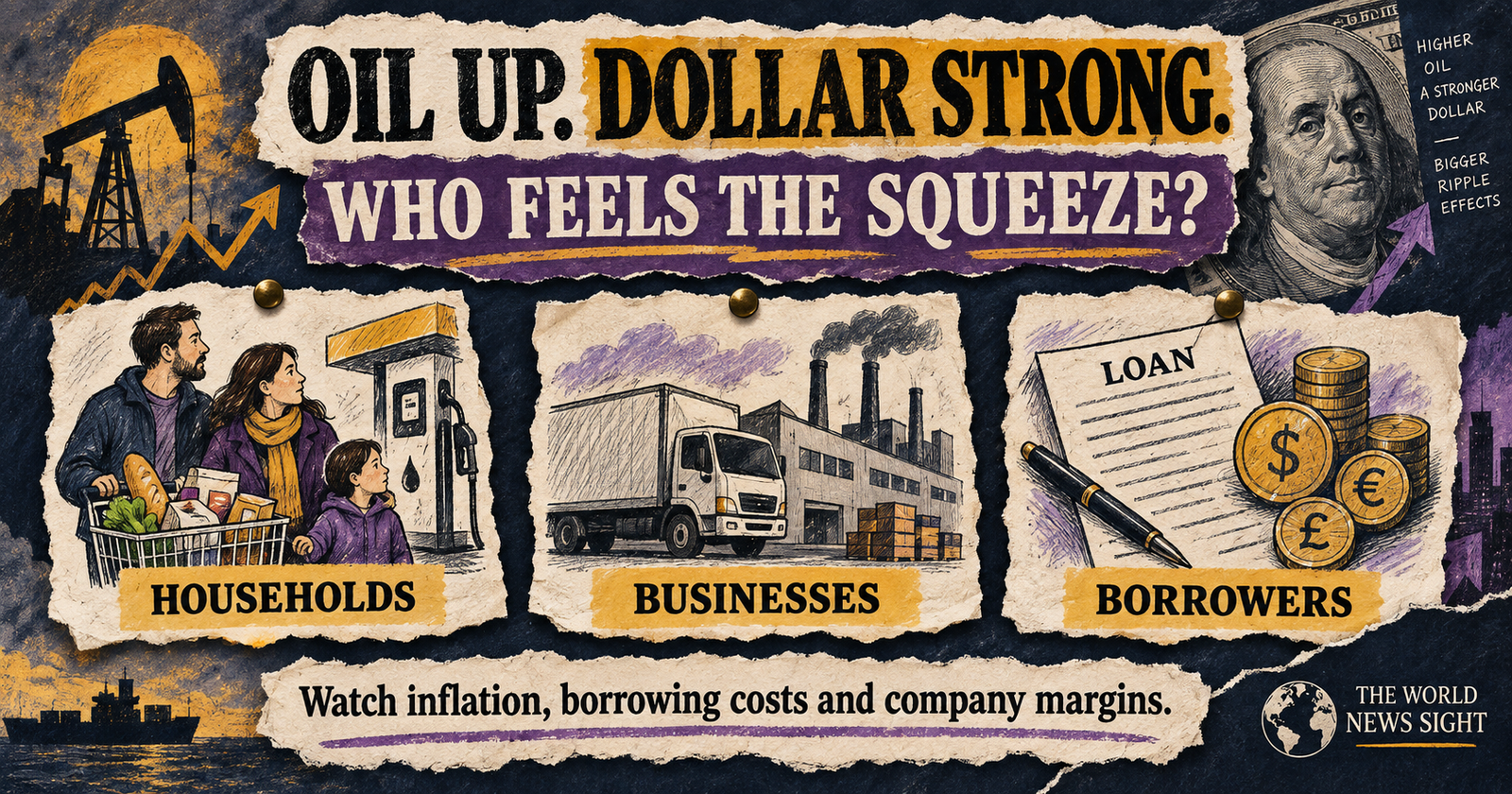
Oil is climbing and the dollar is firm as traders weigh further Fed tightening. For households and businesses, the pressure travels through fuel bills, exchange rates and the cost of borrowing.
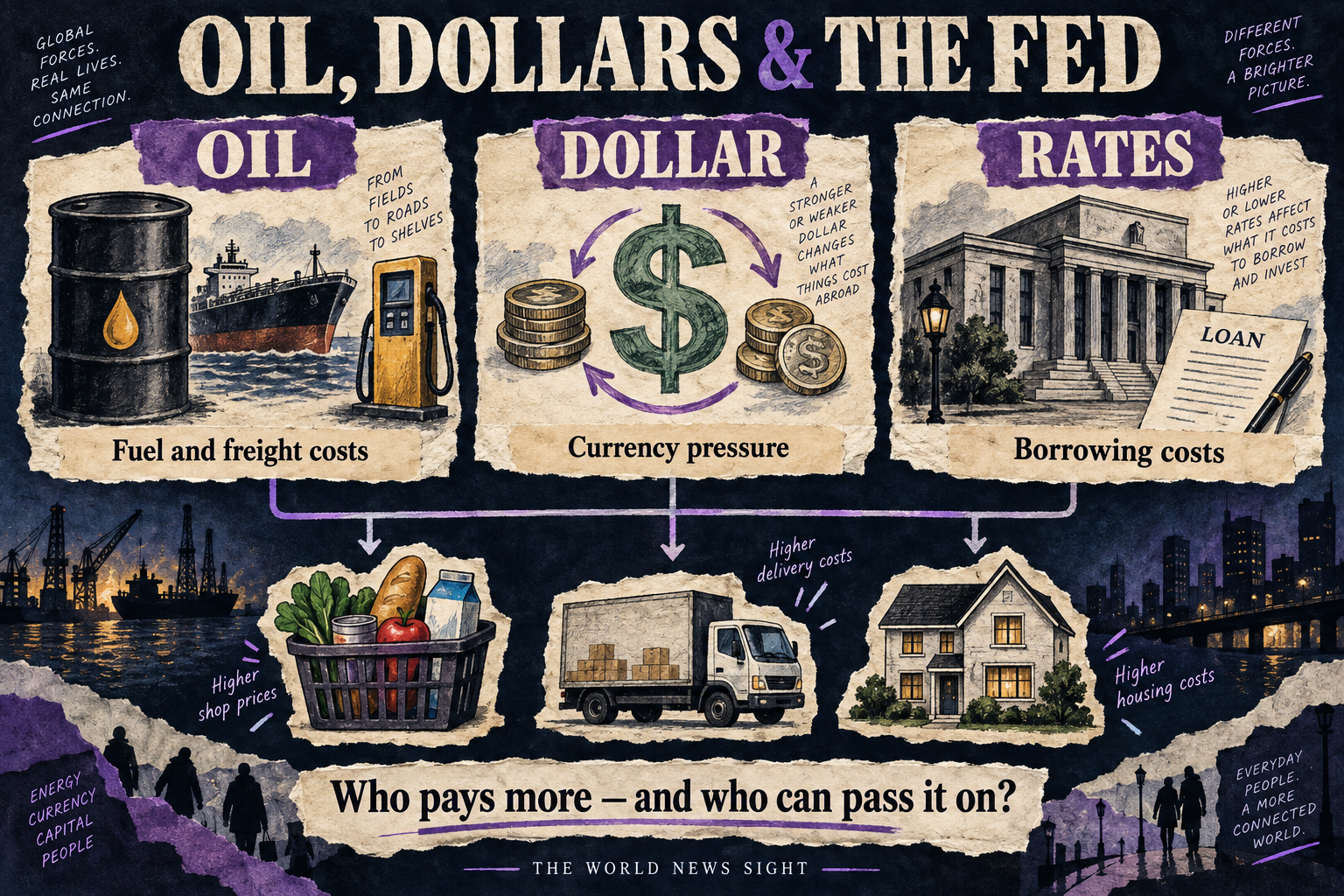
The dollar held near a two-month high in Asian trading on September 28, while Brent crude futures moved above $106 a barrel, Reuters reported. Its report linked the moves to US–Iran tensions, energy-supply risks and expectations of a more restrictive Federal Reserve. Those are a morning market snapshot, not closing prices or a forecast.
For someone paying the bills, the important part is where the pressure lands. A stronger dollar can help a US importer while making the same purchase more expensive for a buyer whose currency has weakened. Higher oil prices can lift a producer’s revenue while squeezing a delivery business.
The Fed has already moved. The next move is still a question.
On September 16, the Fed raised its policy-rate range by a quarter percentage point to 3.75%–4%. Its statement described inflation as elevated and domestic spending as resilient.
Further tightening is a market expectation, not an announced decision. The next scheduled Fed meeting is October 27–28. Before then, investors will keep revising their view as new data arrive.
Higher expected US interest rates can support the dollar by making dollar assets more attractive relative to alternatives. But currencies also respond to risk, growth and policy elsewhere. Oil and the dollar rising together does not establish one simple cause.
How an oil headline reaches a household bill
The first connection is fuel. The US Energy Information Administration explains that gasoline prices are mainly affected by crude costs and available gasoline supply. Refinery problems, inventories and seasonal demand also matter. A rise in crude does not produce an identical, immediate increase at every pump.
Next come businesses that buy fuel: hauliers, airlines and delivery operators. They may raise prices, absorb the cost or do some of both. Contracts, hedging and competition help determine how quickly customers notice.
The question for a business is practical: can it pass on a higher bill without losing the customer?
A small operator with thin margins has less room to absorb it. A household spending more on commuting has less left for other purchases. These are channels of pressure, not a claim that every company or consumer faces the same outcome.
Outside the US, the currency can add another cost
Consider an importer paying a dollar invoice with local-currency revenue. If the dollar rises against that currency, the invoice costs more locally even before the supplier changes its price. When the dollar price of oil also rises, the two effects can compound.
The IMF’s explanation of the strong dollar describes how dollar-invoiced imports and dollar debt can transmit pressure abroad. That is background on the mechanism, not a fresh measurement of today’s damage.
The exposure matters more than the label “emerging market.” A borrower earning local currency but owing dollars can be vulnerable. An exporter earning dollars, or a business with an effective hedge, may have an offset. An existing fixed-rate loan does not automatically reset because the Fed raises its rate; new borrowing and refinancing are different questions.
For stocks, follow the margins
Our reading is that this is a test of business models as much as a headline about inflation. An oil producer may benefit from a higher selling price. A fuel-intensive business may face a cost increase. A US company translating overseas earnings into a stronger dollar may report less dollar revenue from the same foreign-currency sales.
None of that guarantees a share-price direction. Production costs, hedges, debt and the expectations already built into a stock can change the result. “Oil is up” is the start of the analysis.
What would change the picture?
Watch whether energy pressure persists and spreads into broader prices. A sustained easing in supply risk would weaken one reason for inflation concern; a short-lived fall in crude alone would settle little.
The next checks include PCE inflation on September 30 and the US employment report on October 2. Both are scheduled for 8:30 a.m. US Eastern Time. The inflation figures cover August, so they will not capture all of September’s energy moves.
Then look at company commentary: fuel costs, pricing, foreign-exchange effects and refinancing. Together, those details tell us who is absorbing the squeeze. Our week-ahead guide sets out the wider calendar.